Telegram Mini App / Beta / 2026
FamilyBudget
A shared family budget that lives inside Telegram.
Two partners, one ledger. Expenses are recorded in two taps, and the other person sees the number immediately — envelopes with limits, wallets derived from the ledger, savings pots and a daily spending rate. No spreadsheet, no separate app to install.
- Role
- Product, design and engineering — solo
- Stack
- Go · MySQL · Next.js · React · Telegram Mini App · Swift (iOS) · GitHub Actions
- Status
- Beta — used by real families, including mine
- Year
- 2026
What it does
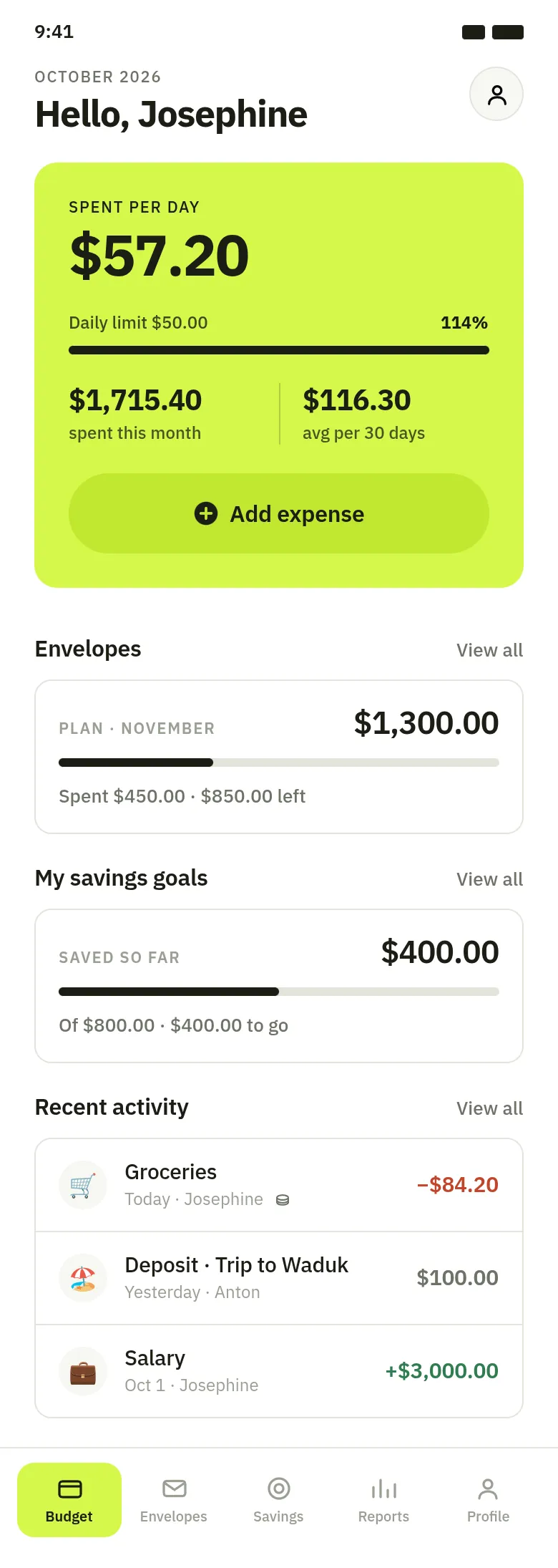
A family budget fails at the moment recording an expense costs more effort than ignoring it. So the product is built around one number — how much this family can spend today — and everything else exists to keep that number honest.
01
Envelopes
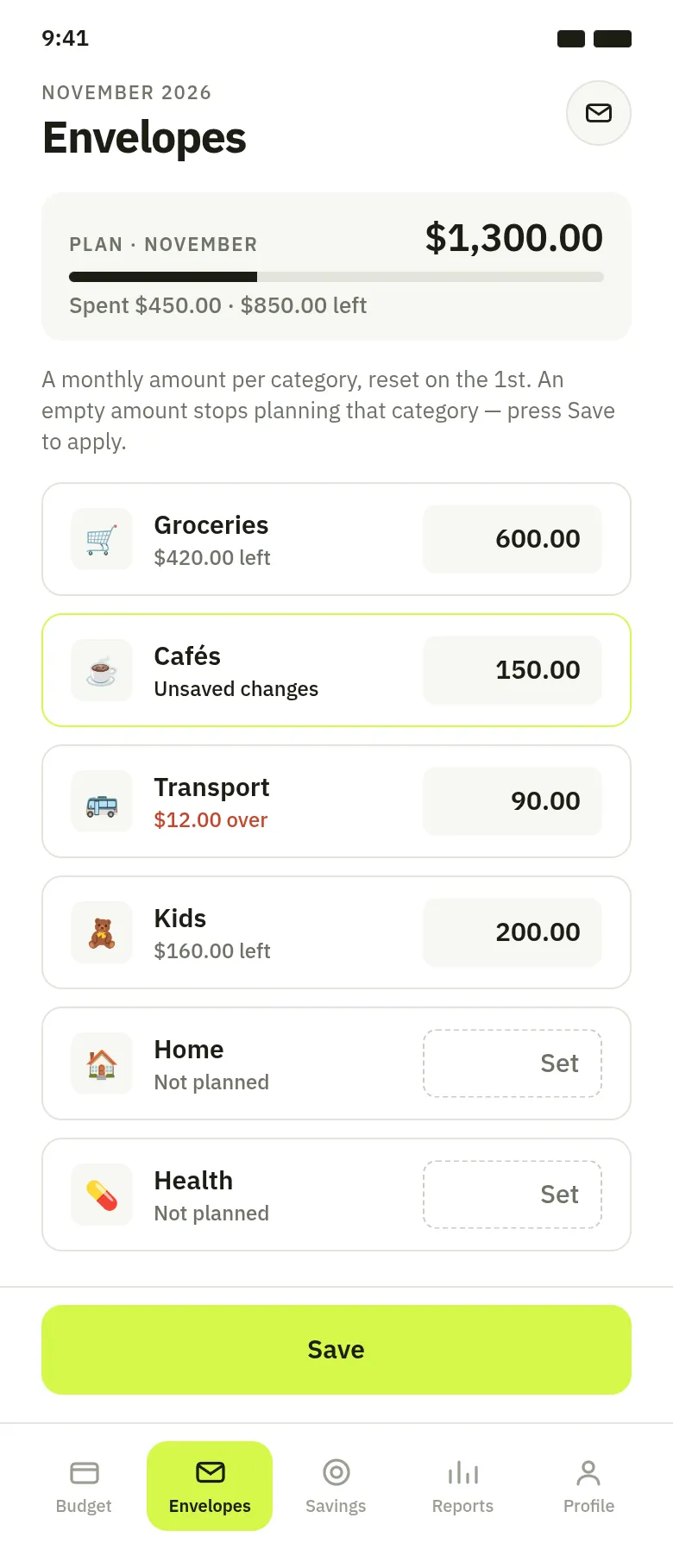
A limit per category. Spent and left are always in view, and next month’s plan can be built from the envelopes that closed.
02
Two-tap expenses
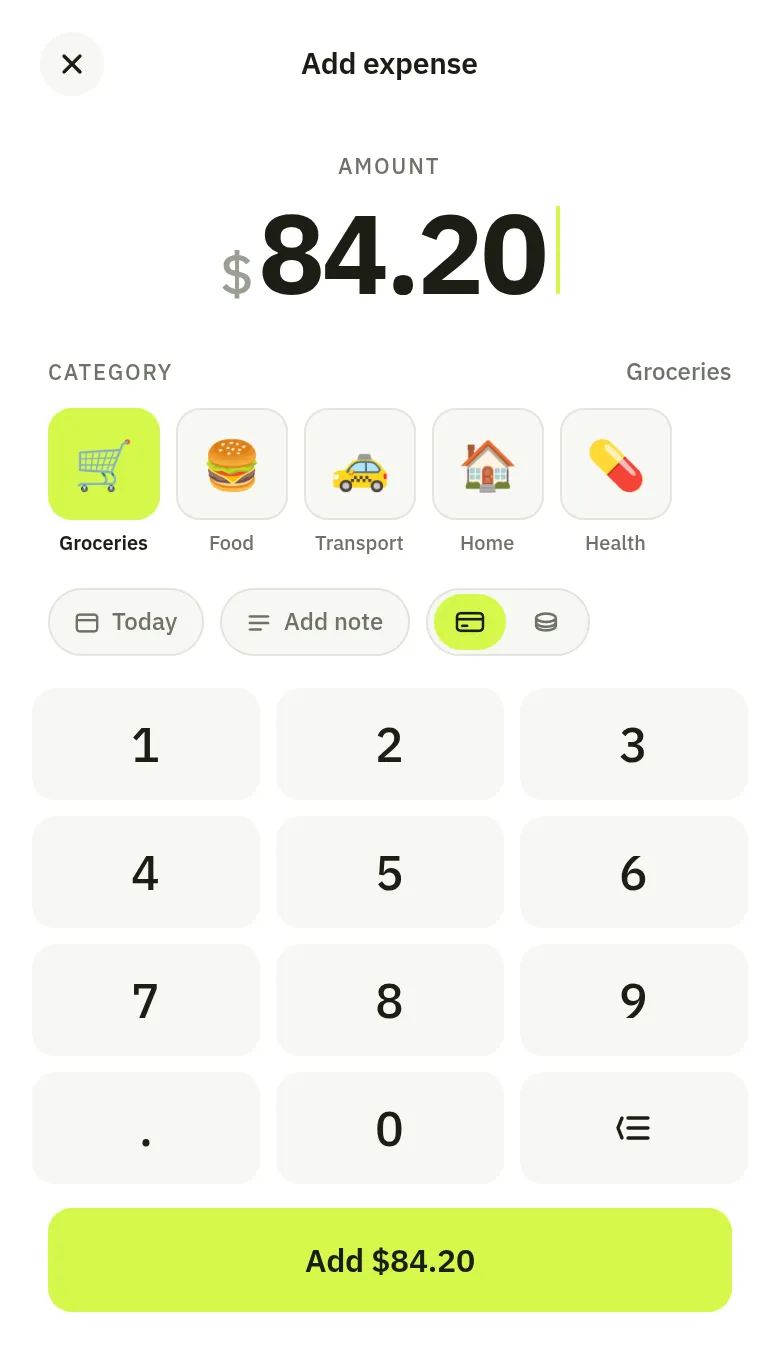
A category and an amount. The partner sees the record immediately — no screenshots, no sync, no separate app to open.
03
Wallets from the ledger
What each member has left is derived, never stored: money in, minus money out, minus whatever went into pots.
04
Pots and cash
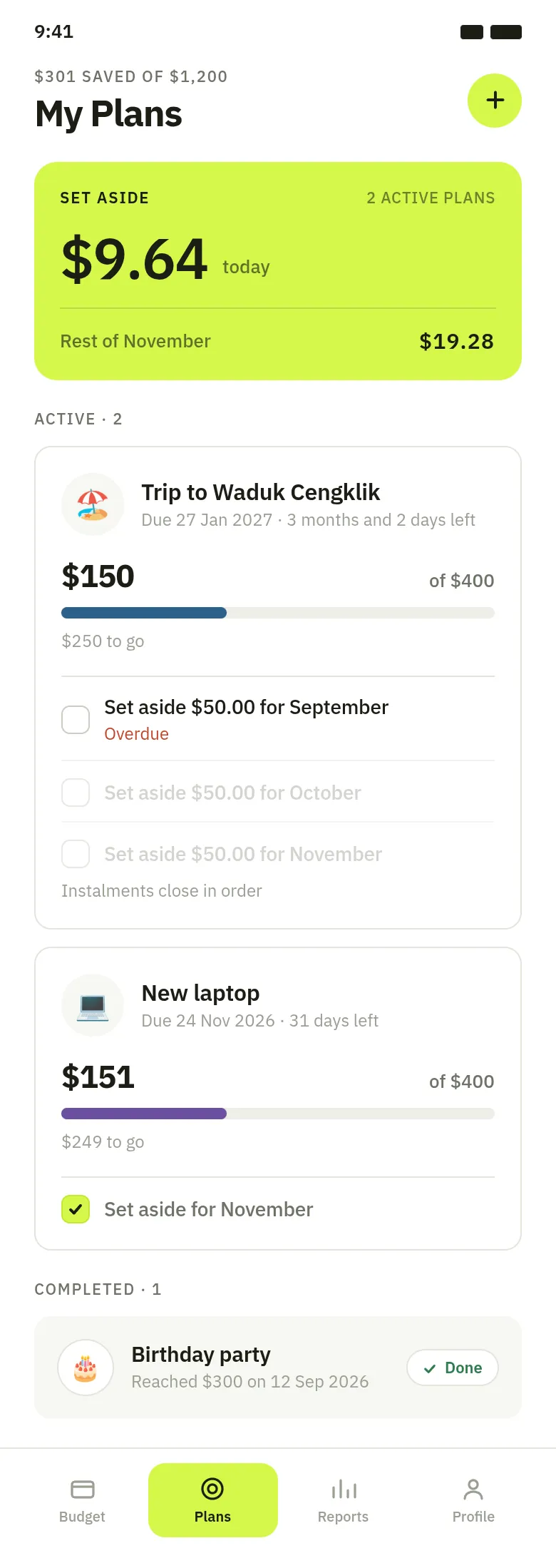
Goals carry a date and a payment schedule. Physical cash lives in its own pot and is deliberately not counted as savings.
05
Reports
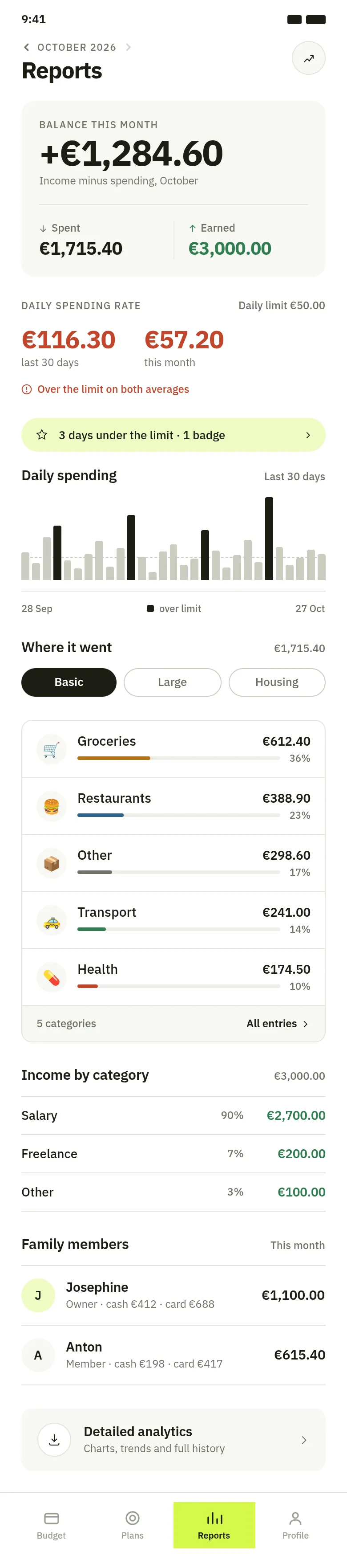
Daily spending rate against the limit, a 30-day history, and where the money went by category and by member.
06
Statement import
Upload a bank statement, review the parsed lines, fix categories, confirm. Duplicate rows are skipped.
07
Digests in chat
The bot writes when it matters: an envelope at 80%, weekly totals on Sunday, the month’s results on the 1st.
08
Invitations, not codes
A partner joins through a link that expires in 30 minutes. There is no permanent join code to leak.
The screens
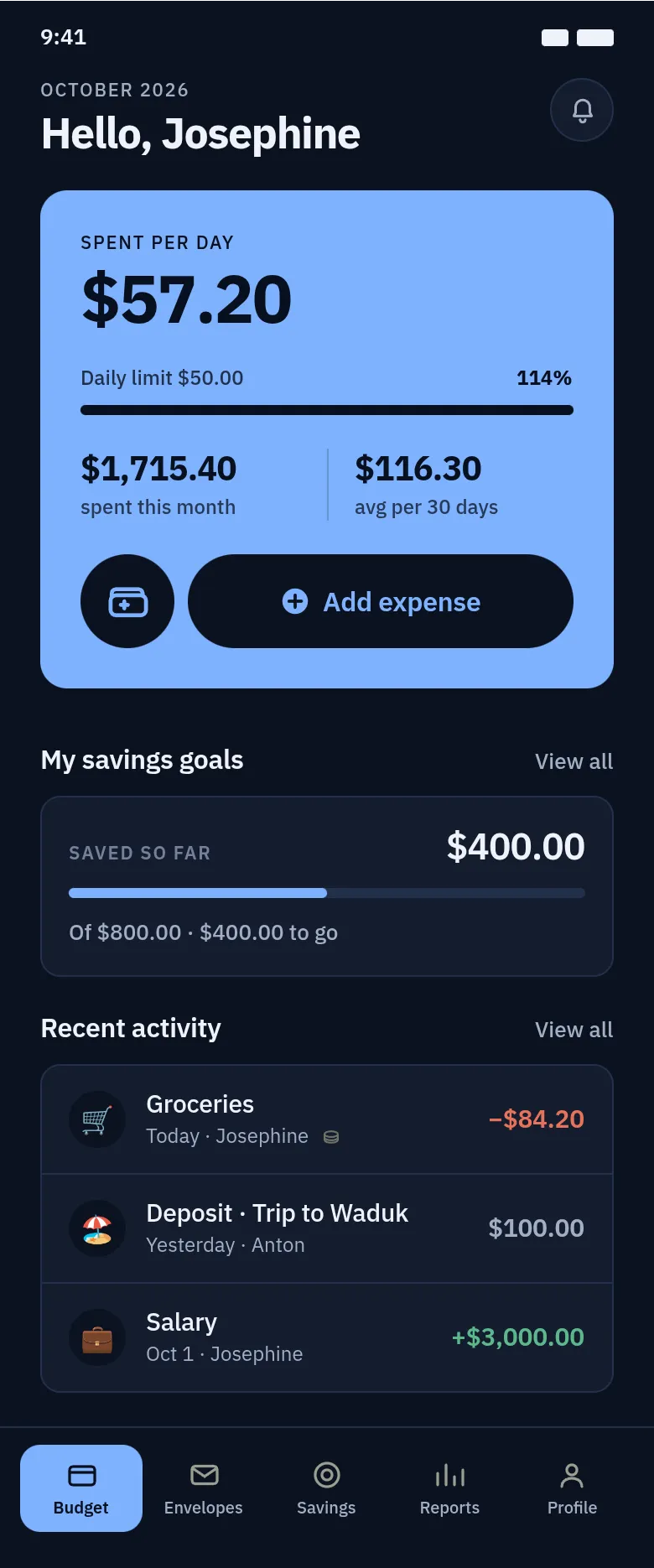
6 viewsDesigned in Paper, then built twice: once as a Telegram Mini App and once natively for iOS. The same token set drives both.
The design system
One lime that means “money you still control”, a warm paper-like surface, and a charcoal elephant that carries the brand. Every colour, radius and type step is a token, so the mini app and the iOS build cannot drift apart.
- #D4F84APrimary
- #F6F7F2Surface
- #1A1D14Ink
- #C2452DNegative
- #2F7D4FPositive
Decisions I would defend again
A wallet is a projection, not a row
Storing a balance means two writers and a reconciliation job. Deriving it from the ledger means the number can never disagree with the history behind it.
Author and payer are different people
“She paid the rent, I recorded it” is the common case in a family. Two fields keep an edit from silently moving money between wallets.
Permanent credentials have no expiry
The first version had a short family join code. It was removed: anyone who ever saw it could join forever. Joining is now an invitation or nothing.